May 2, 2026 · Pilot Tool Bag
Wing Icing: The Silent Killer in Cold-Weather Flying
Even a thin layer of ice on a wing can dramatically reduce lift, increase drag, and lead to loss of control. Here is what every pilot needs to know.
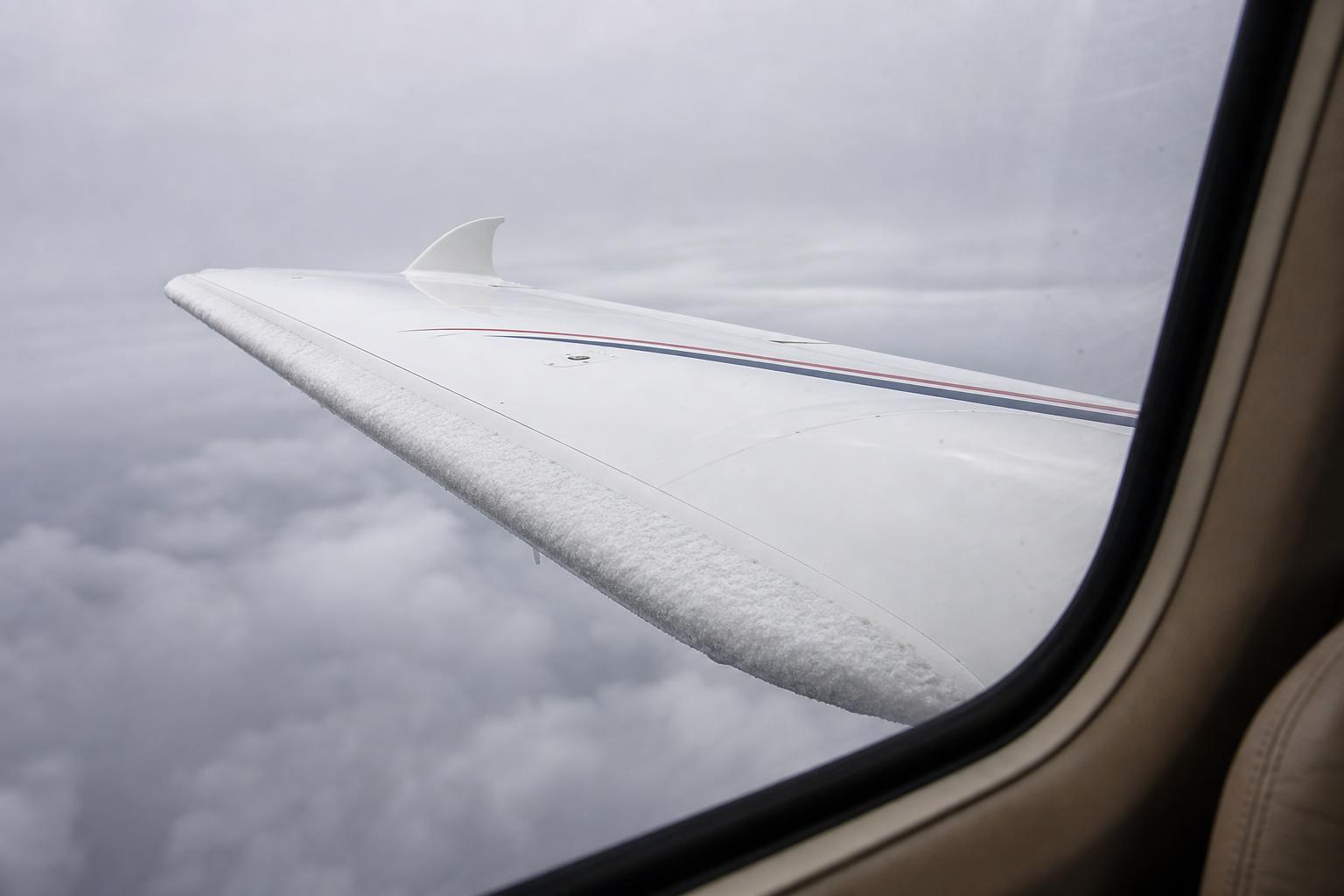
Wing icing is one of the most insidious hazards in aviation. Unlike a sudden mechanical failure, it builds up quietly while you fly through the wrong cloud at the wrong temperature, slowly reshaping the airfoil that keeps you aloft. Roughness no thicker than a piece of coarse sandpaper on the leading edge can reduce lift by as much as 30% and increase drag by 40%. By the time the airframe feels heavy or the controls feel mushy, the margin you rely on for a safe landing may already be gone.
What makes icing so dangerous is the way it changes the wing rather than just adding weight. Ice disrupts the smooth airflow that produces lift, raises the stall speed, and lowers the angle of attack at which the wing will quit flying. Tailplane icing is even more sinister: it can cause an uncommanded pitch-down on flap extension that is nearly impossible to recover from at low altitude. Add to that frozen pitot-static ports, blocked fuel vents, and propeller imbalance, and a routine flight can unravel in minutes.
The most reliable defense is to avoid known or forecast icing in the first place. Read the Freezing Level chart, the AIRMET Zulu, and PIREPs before every cold-weather flight. Visible moisture plus temperatures between roughly +2°C and -20°C is the danger zone, with the worst supercooled droplets typically found between 0 and -10°C. Plan an out: a warmer altitude below, an above-freezing layer above, or an airport behind you that stays VFR. If you are not flying a known-icing certified aircraft, treat any forecast icing as a no-go.
If you do encounter ice, act early and decisively. Turn on pitot heat and carb heat or alternate air, change altitude to escape the icing layer, and tell ATC you need a priority routing. Add power and fly the published approach speed plus a healthy buffer, leave the flaps up or only partially extended on landing if the POH permits, and avoid abrupt control inputs. Above all, debrief honestly afterwards: every successful icing escape is a free lesson in how easily the next flight could go the other way.