May 19, 2026 · Paul Holdredge
Recovering from Mistakes
We all make mistakes. In flying, the consequences can feel significant, even when they’re minor. Here are some ways to think about and recover from mistakes.
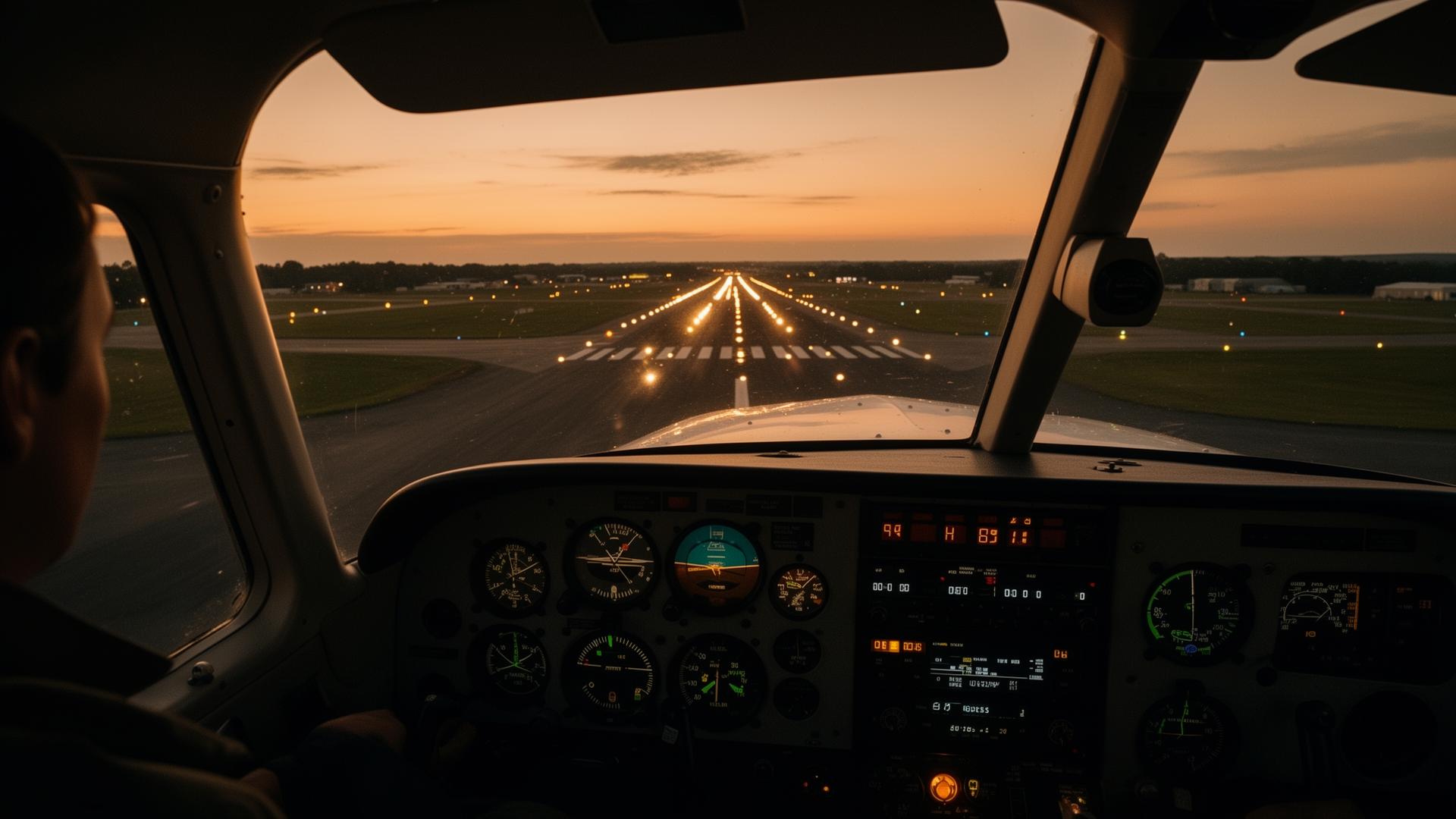
Flight training provides many opportunities to make mistakes, but we don’t talk enough about how to recover from them. Recently I took Jay, an advanced student, for a long night cross country training flight. Returning to our home airport, I asked him where we were and how he’d find the field. He struggled to find the airport, anxiously circled looking for landmarks, and re-checked his planning. I suggested he look below us. Crestfallen, he quietly landed the airplane. He seemed frustrated in our debrief.
It’s likely you’ve made some errors in your training or flying career. Perhaps small, like forgetting to set the altimeter. Some errors can be serious, can create immediate danger, or can be made worse by mishandling, like VFR into IMC. Aviation is built around preventing, managing, and learning from errors. But mistakes are rarely an isolated event; most often, they arise from a chain of events. What students often aren’t taught is what to do when a mistake is made.
Like aviation decision-making and risk management, a good process can help manage mistakes. Most errors can be corrected safely, while some are urgent threats that must be handled well. Urgent threats depend on strong training, proper immediate action, and proficiency. In non-critical situations, a good process is to recognize, assess, and act (the FAA uses perceive, process, and perform). First you must acknowledge the issue honestly, and own it. “I am one-half mile off course,” I will have my students say aloud. Then you must decide on a correction based on a range of options. Do you reset the navigation, turn toward the course, or cancel the trip? Finally, you must act. Initiate a turn, plan to re-intercept, and verify. With those steps complete, the error is resolved - but you’re not done. How can you learn from the mistake? In this example, you might increase your instrument scan rate, or get some additional instruction on tracking a course.
The recognize, assess, and act process also applies in a broader sense. For instance, a friend made a rough landing on a solo cross country. Later she recognized the thread of pressures that brewed the situation, took stock of her training, and decided she needed to work with a different instructor. She found one that aligned better with her needs and finished her certificate. Working with Jay, we found that nighttime illusions after a long day led to fatigue and difficulty recalling knowledge like pilot-controlled lighting and trouble locating our field. We reviewed the knowledge, prepared for our next night flight, and he enjoyed finding all the fields along our route.
We all want to perform our best, and making an error can be disappointing. All your deep training and proficiency is meant to enable you to quickly handle critical situations. A calm, decision-making approach to managing non-critical errors is a mark of professionalism. Take a breath, don’t fixate, and honestly recognize the issue, assess options, and act for a correction. Later, consider what gave rise to the error and how you can learn. It’s okay to get a little rattled. Good pilots recover and regain control of the situation. Mistakes matter, and recovery is the skill you’re building.