May 22, 2026
Demystifying Maneuvering Speed
Va isn't just a number in the POH—it shrinks with weight, doesn't shield you from turbulence, and is widely misunderstood. Here's what it really means.

Maneuvering speed is one of those numbers every pilot can recite from memory, yet many don't fully appreciate what it represents—or how much it changes during a flight. At its core, maneuvering speed is the maximum speed at which you can make a full, abrupt control input without overstressing the airframe. Below this speed, the wing will stall before it exceeds its structural limits. Above it, the airplane can break before it stalls. That distinction matters more than most students realize.
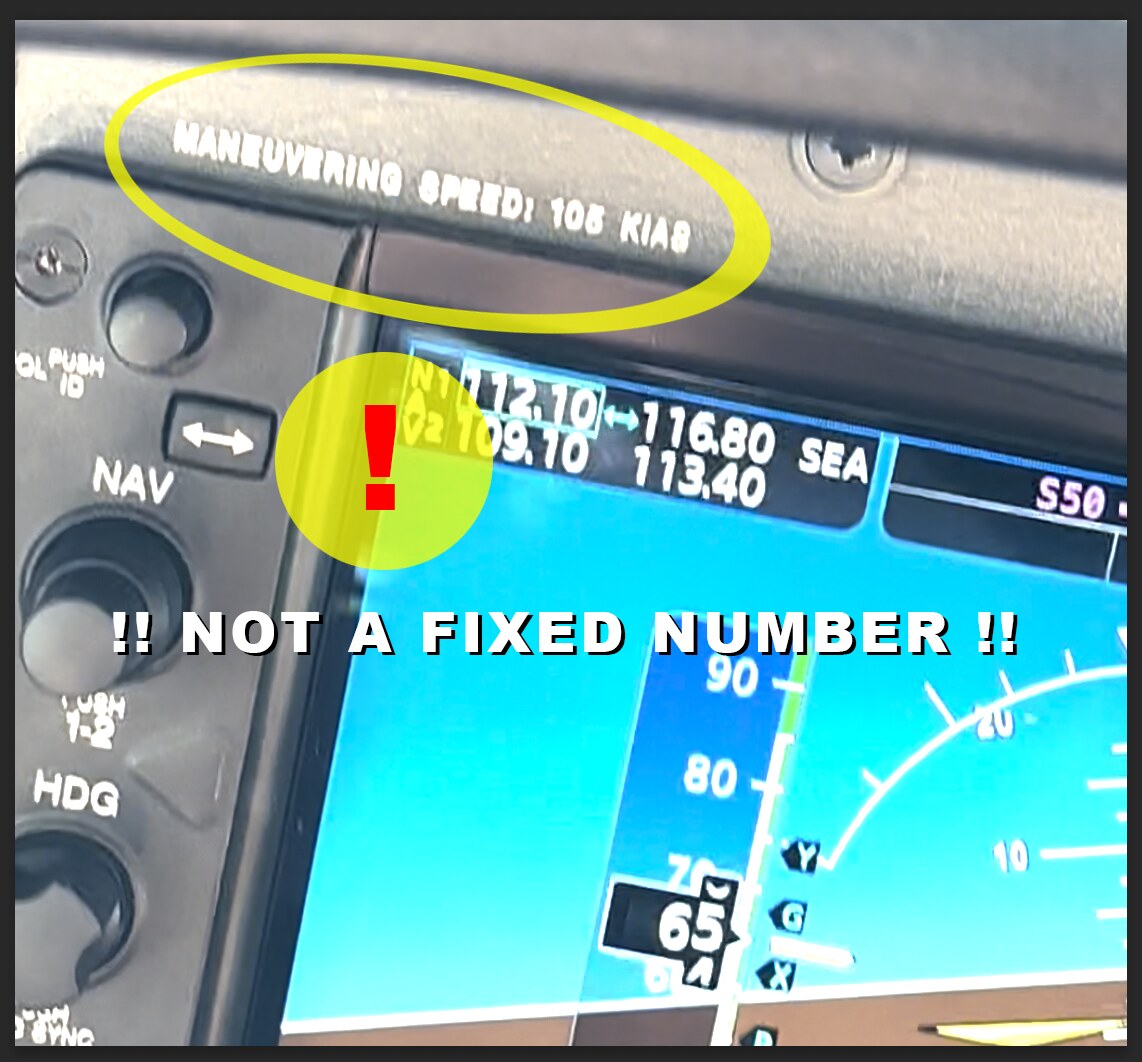
Placards like this one publish a single Va — but that number assumes max gross weight. Treat it as a ceiling, not the answer.
What often gets overlooked is that Va depends on weight. The maneuvering speed printed in the POH is almost always based on maximum gross weight. If you're lighter—because you're flying solo, or you've burned off an hour of fuel—your actual Va is lower. A lighter than max gross weight airplane stalls at the same angle of attack, but can exceed structural limits by getting to that angle much faster and inducing more G force than when it is heavier. In other words, the number in the book is not the number you're actually flying with.
This becomes especially important on longer flights. As fuel burns off, the airplane's weight steadily decreases, and so does maneuvering speed. A pilot who climbs through turbulence at the published Va may unknowingly be flying above their true Va an hour later. The airplane feels the same, the controls feel the same, but the margin of protection quietly shrinks. Understanding this relationship is part of flying with mechanical sympathy—treating the airframe like the precision machine it is.
Another common misconception is that maneuvering speed is a "turbulence speed." It isn't. It's a structural protection speed for full, abrupt control inputs, not a magic shield against rough air. In turbulence, the airplane—not the pilot—is making the control inputs, and those inputs aren't always symmetrical or predictable. Flying at or below your current Va helps, but it doesn't eliminate the possibility of encountering a gust strong enough to exceed load limits.
The practical takeaway is simple: calculate your actual Va when weight changes significantly. Many POHs include a chart or formula, and modern EFBs can compute it automatically. Whether you're flying a 152 or a Cirrus, knowing your real maneuvering speed is part of flying professionally. It's a small detail that separates pilots who merely operate an aircraft from those who truly understand it.