June 3, 2026 · Amanda Glaser
Checkride Day: A Guide to Getting Prepared and Reducing Exam Stress
A CFI shares practical checkride preparation strategies — from binder setup to day‑of checklists — to help student pilots reduce anxiety and perform at their best.
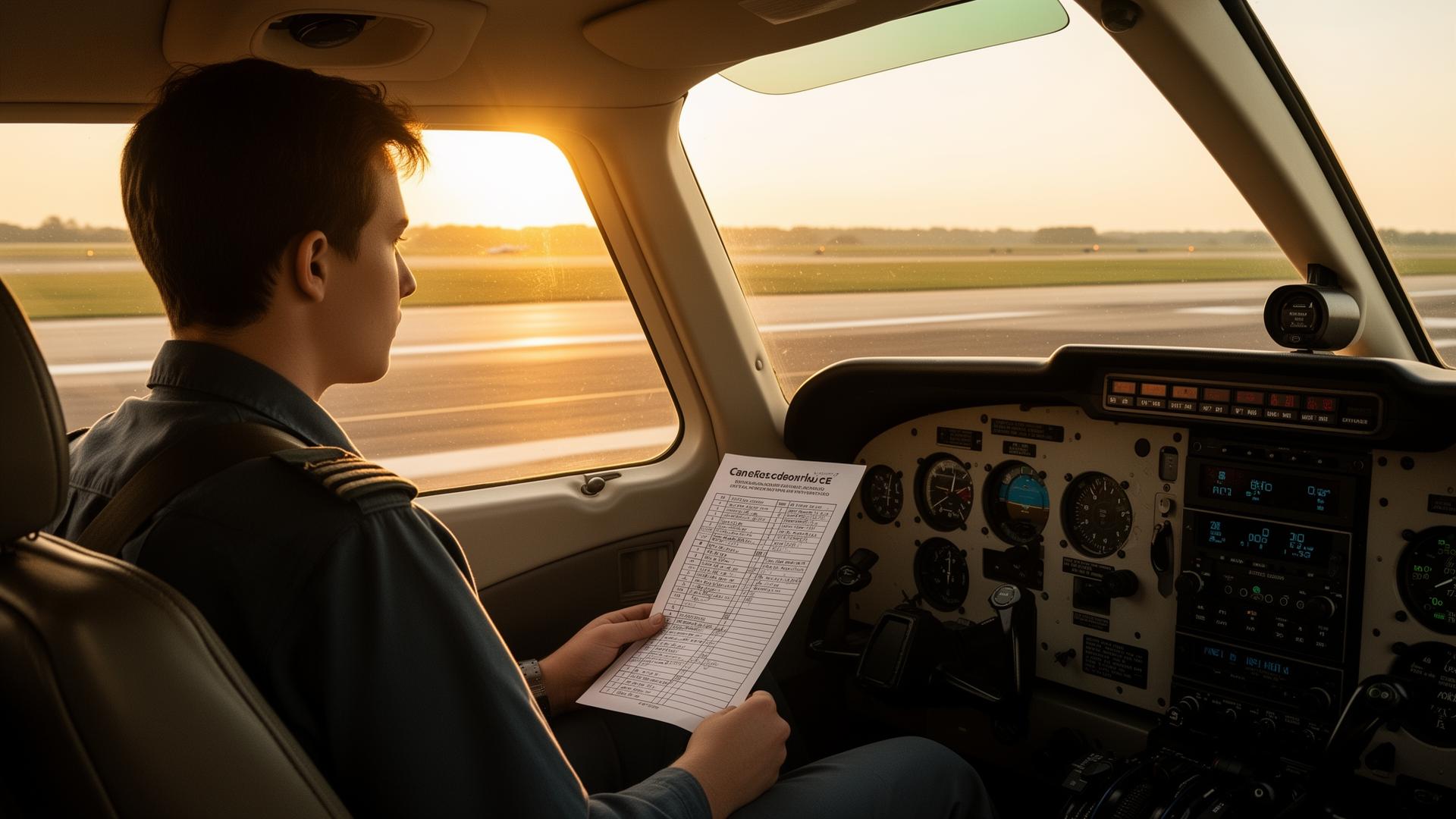
“Do you have everything?” my husband asks.
“I do … just going through my checklist to make sure,” I reply.
“Say hi to Bo-Linda for me,” he says as he wishes me luck and I leave.
Bo-Linda is the AI ordering system’s name at the local restaurant where I complete my pre-checkride ritual. A chicken biscuit and an unsweetened iced tea ride next to me to the airport and are enjoyed in flight on my way to meet my examiner. It’s my version of a baseball player’s “lucky socks.”
Checkrides are an important milestone for every pilot. They are the culmination of intense training, and many applicants feel anxious about making sure that they are prepared and able to perform their best on the day they get to demonstrate their knowledge and skills.
Here are a few strategies that can help reduce that anxiety and put your best self forward on checkride day.
Prepare Prepare Prepare: This is really the foundation.
a. Know your material for your certificate and rating, and understand the test standards (the ACS or PTS) for each maneuver or requirement. b. Know your aircraft, its key systems, and its limitations - read (yes, read) the POH and look at the diagrams and charts. c. Tab relevant publications that you plan to bring (FAR/AIM, Airplane Flying Handbook, Pilot’s Handbook of Aeronautical Knowledge, etc). If you are bringing a paper FAR/AIM, make sure it is the current year. d. Go through the plane’s maintenance logs & tab relevant inspections at least a week ahead of time. Consult your mechanic if you have any questions or see a discrepancy. e. Take a mock checkride with a different instructor than you usually fly with. f. Do a mock ground exam to practice the Q&A format (and watch some mock checkrides online). g. Go through your cross-country plan with your CFI, and have them ask you questions about it.
Craft your Checkride Binder:
Show the DPE that you are approaching this exam with professionalism. I recommend having these items printed and organized in a binder to bring with you.
- Updated personal minimums document
- Written Exam Score Report
- Paper copy of IACRA application
- Paper or printed Navlog for the Cross Country scenario (even if you planned it in your EFB, bring a printout)
- Key POH pages: Weight & Balance CG envelope, takeoff and landing performance charts
- Approach plates, Departure Procedures, Airport Diagrams relevant to your cross-country scenario (including alternates) if you’re doing an instrument ride.
- If you use a paper logbook, tab the key aeronautical experience items (prior checkrides, required cross-countries, solo flights, night time, etc). If you use a digital logbook, ensure that you print it and highlight the relevant experience.
- Experience report showing hours (if you are using an electronic logbook as primary or backup)
- Any advisory circulars you feel are relevant
Kneeboard Notes:
These are your notes of items to remember when things get stressful during the flight. These will be unique to each PIC, and can be anything including making sure that you remember to give the safety and departure briefings, the CRAACC checklist (clearing turns, reference point, altitude, airspeed, configure, clean up/cruise checklist), airspeeds in the pattern, pivotal altitudes, etc. These are meant to jog your memory, so keep this focused to the critical few. Try them out on your mock checkride and revise as needed.
Breathe:
This one can sound a little woo-woo, but using your breath is a time-tested way to regulate your nervous system. Practice calm pilot or box breathing (inhale for 4 counts, hold for 4, exhale for 4, hold for 4) at home and on training flights. Yoga classes can also be excellent places to find additional techniques and guided practice.
Visualize a positive outcome:
Again, this can feel a little cheesy, but there is a reason it is a mainstay in both business and sports psychology - it works. Imagine yourself chatting with the examiner during the oral portion and hearing the magic words, “Let’s go fly.” Chair fly each maneuver or approach type you will be tested on, and get that muscle memory in a low-stress environment. See yourself nailing that last landing, and getting the coveted handshake and congratulations from your examiner.
Create your “Day-Of” Checklist:
Every pilot loves a good checklist, and this is one not to neglect. Make a list of the things that you need to bring with you:
- Personal Documents (Pilot’s Certificate, Medical, Photo ID - these have to be originals, not copies)
- Your logbook with all needed endorsements (including TSA)
- The plane’s maintenance logs & ARROW documents
- Checkride Binder (Witten score report, Navlogs / Scenarios, Weight & Balance, etc should already be in here)
- Reference Materials (current FAR/AIM, Handbooks)
- Examiner’s fee
- EFB/laptop/devices charged & all software and charts are up to date
- View limiting devices (foggles/hood)
- Fresh batteries if your headset requires them
- Charging cables and a power bank for keeping everything topped off
- Credit card for buying fuel
- Breakfast/Lunch/Snacks as required & a water bottle
- Anything else you feel like you need to be successful!
The night before:
Take it easy. Don’t stay up all night cramming or reviewing flashcards. Do some light review, eat a good meal, and then spend a few hours doing something relaxing to wind down (watch TV, play a board game, read a book, and limit screen time). Do your best to get at least 6 hours of quality sleep so that you can perform at your best the next day.
Checkride day is exciting, and you want to be at your best. Prepare everything you can in the days / weeks beforehand to minimize last-minute scrambling, get proper nutrition and rest, and keep things in perspective. Then go out and show the examiner what you’ve got!